Saket Suman
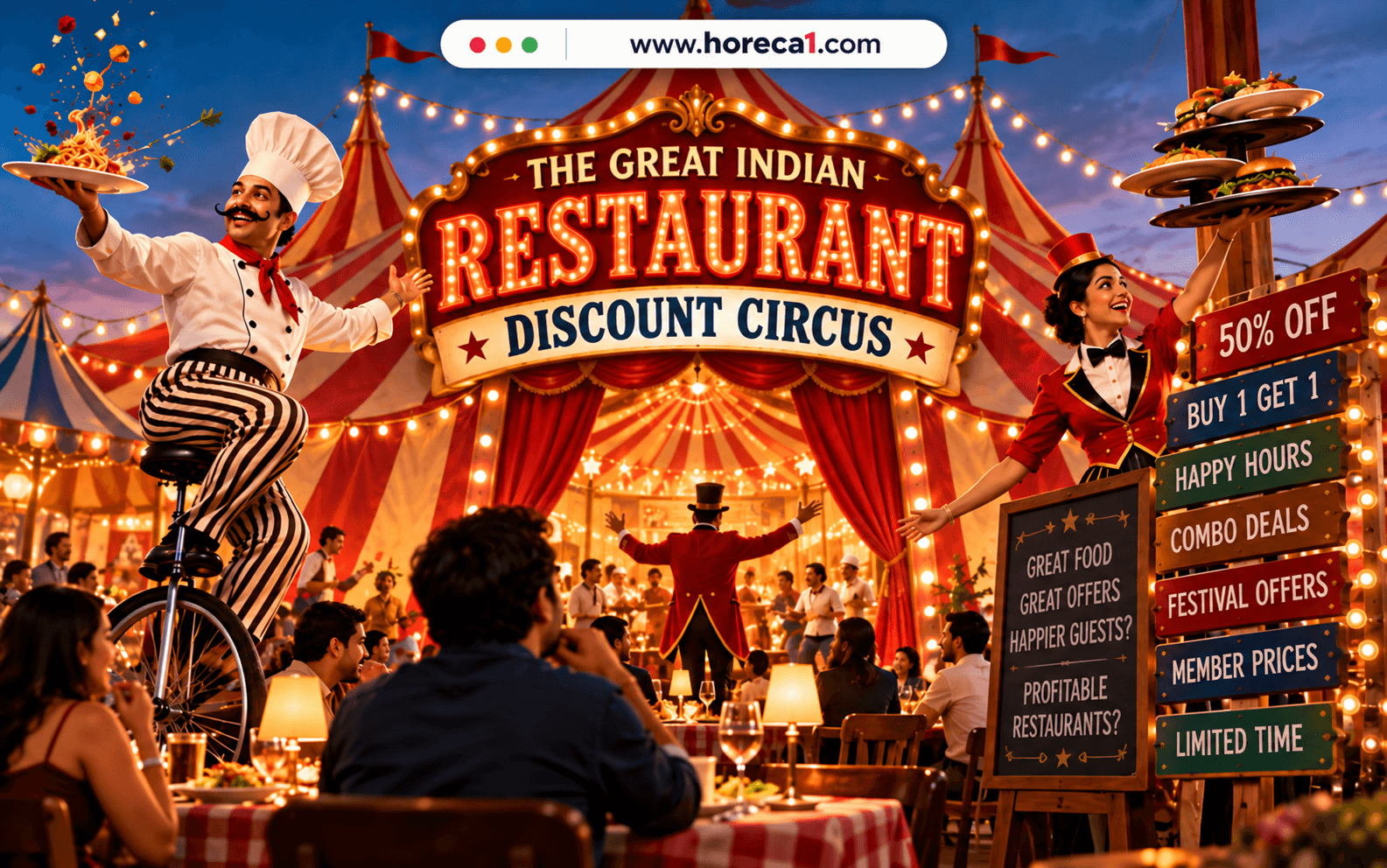
The Great Indian Restaurant Discount Circus
# The Great Indian Restaurant Discount Circus *When did the price on the menu stop being the real price of the food?*
There is a peculiar trend in Indian dining out. A restaurant prints a menu. The customer opens an app. The app announces a discount. The customer feels victorious. The restaurant gets an order. And somewhere, in all this the accountant can't even figure out "Who paid for the meal - the Customer or the Restaurant?.
A Rs.500 dish is sold for Rs.400. The platform takes its commission on top of that. The restaurant funds the discount plus the commission. The customer, of course, is delighted.
But... the restaurant owner is left wondering whether he has just paid someone to eat at his establishment.
Welcome to the great Indian restaurant discount circus. Discounts were meant to attract customers. Somewhere along the way, they became the business model. Customers learnt to wait for offers. Platforms learnt to promote them. Restaurants learnt that a full house is not necessarily a profitable one.
And thus the circus routine continues. A restaurant raises menu prices to accommodate discounts. The platform offers a bigger deal. The customer demands a better bargain. The restaurant raises prices again.
Everyone is celebrating the discount. Nobody seems particularly interested in the actual price of the meal.
# The mathematics behind the madness Let’s take a ₹500 order. The following is an illustration, not a universal platform fee structure.
- Menu value: **₹500** - Restaurant-funded discount of 20%: **–₹100** - Customer pays: **₹400** - Platform commission, assumed at 25% of the discounted order: **–₹100** - Restaurant receives: **₹300** - Ingredients: **–₹160** - Packaging: **–₹20** - Left over: **₹120**
That ₹120 is not profit. It still has to help pay for staff, rent, electricity, maintenance and the other costs of keeping the restaurant open. The customer sees a ₹100 saving. The restaurant has surrendered ₹100 in discount and another ₹100 in commission - and has ₹120 left before much of its operating cost is even considered.
A busy restaurant can therefore be busy in all the wrong ways. **Orders are not earnings. Revenue is not profit. And a discount is not a strategy simply because it generates sales.**
Share this Inshorts Card
Spread recognition to fellow chefs, vendors, and restaurateurs.